
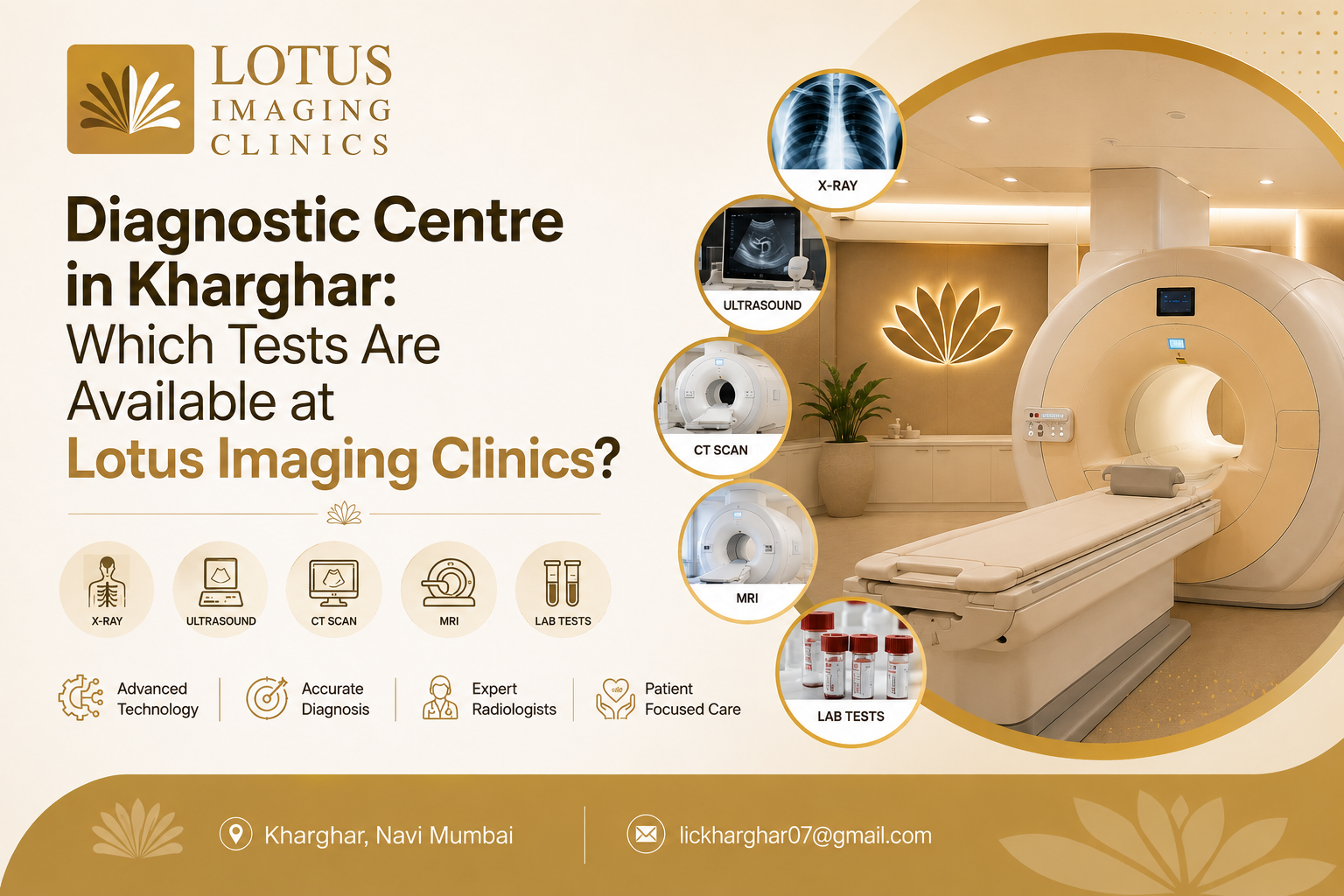
Diagnostic Centre in Kharghar: Which Tests Are Available at Lotus Imaging Clinics?
When a doctor recommends a diagnostic test, patients often want to understand why it is needed, how it works, and what information it can provide. Choosing a reliable Diagnostic Centre in Kharghar can make the testing process more convenient and comfortable.
Today, diagnostic imaging and pathology play an important role in healthcare. Different tests provide different types of information, helping doctors investigate symptoms, identify abnormalities, monitor certain conditions, and make informed healthcare decisions. Lotus Imaging Clinics offers a range of diagnostic services to support these requirements.
Understanding Diagnostic Services and Their Importance
Diagnostic services include medical imaging and laboratory investigations that provide valuable information about a person’s health. Depending on the symptoms and clinical requirements, a doctor may recommend tests such as an MRI, CT scan, ultrasound, X-ray, sonography, or pathology investigation.
A Diagnostic Centre in Navi Mumbai can help patients access these investigations in a structured healthcare environment. The appropriate test is generally selected by a doctor based on the patient’s symptoms, medical history, physical examination, and suspected condition.
What Tests Are Available at Lotus Imaging Clinics?
Different diagnostic tests have different purposes. Understanding their basic functions can help patients know what to expect.
1. MRI Scan
Magnetic Resonance Imaging, commonly known as MRI, uses magnetic fields and radio waves to produce detailed images of structures inside the body. It can provide clear images of soft tissues and is commonly used to examine areas such as the brain, spine, joints, and other internal structures.
An MRI may be recommended when a doctor needs detailed information about a particular area of the body. The preparation and procedure can vary depending on the type of MRI being performed.
2. CT Scan
A CT scan combines X-ray technology with computer processing to create cross-sectional images of the body. It can provide detailed views of internal structures and may be recommended for different medical concerns, including certain injuries and suspected abnormalities.
Some CT examinations may involve contrast material, depending on the information required. Patients should follow the preparation instructions given for their specific examination.
3. Ultrasound and Sonography
Ultrasound uses high-frequency sound waves to create images of organs and tissues inside the body. Since it does not use ionizing radiation, it is commonly used for examining various areas, including the abdomen and pelvis.
Doctors may recommend ultrasound or sonography to investigate symptoms, evaluate specific organs, or monitor certain conditions. Preparation can depend on the type of examination.
4. X-Ray
X-ray is a widely used imaging technique that creates images of structures inside the body. It is frequently used to examine bones and the chest and can help doctors investigate conditions such as fractures and certain chest-related concerns.
The procedure is generally quick, although the exact process depends on the body part being examined.
5. Pathology Tests
Pathology involves examining samples such as blood, urine, or other specimens. These investigations can provide important information about different aspects of health and may support diagnosis, monitoring, or evaluation of certain medical conditions.
The type of pathology test required depends on the patient’s symptoms and the doctor’s recommendation.
How Do Doctors Decide Which Test You Need?
Not every symptom requires the same diagnostic investigation. Doctors consider several factors before recommending a test, including:
- Symptoms and their duration
- Medical history
- Physical examination findings
- Previous reports and investigations
- Suspected health condition
- Body part that requires evaluation
- Type of information needed
For example, an X-ray may be useful for evaluating certain bone-related concerns, while an MRI can provide detailed information about soft tissues. CT scans and ultrasound also have their own specific applications.
Patients should not select a diagnostic test based only on symptoms. The appropriate examination should be determined according to medical advice.
Why Is Choosing the Right Diagnostic Centre Important?
Choosing an appropriate Diagnostic Centre in Navi Mumbai can help patients access the investigation recommended by their doctor. When considering a diagnostic facility, patients may look at factors such as:
- Availability of required tests
- Quality of imaging equipment
- Qualified healthcare professionals
- Reporting process
- Patient comfort and safety
- Clean and organized facilities
- Convenient location
Patients should also carry their doctor’s prescription or referral, previous reports, and relevant medical information when visiting the centre.
How Lotus Imaging Clinics Supports Diagnostic Care
Lotus Imaging Clinics provides a range of imaging and diagnostic investigation services for patients who have been advised to undergo specific tests.
From MRI and CT scans to ultrasound, sonography, X-ray, and pathology investigations, having access to different diagnostic services can make it easier for patients to complete recommended investigations according to their healthcare needs.
Lotus Imaging Clinics in Navi Mumbai focuses on providing diagnostic services that support the patient’s healthcare journey from investigation to reporting.
Frequently Asked Questions
1. What types of diagnostic tests are available?
Diagnostic services can include MRI, CT scan, ultrasound, sonography, X-ray, and pathology investigations. The availability of a particular test depends on the facility and the patient’s requirement.
2. Do I need a doctor’s recommendation for a diagnostic scan?
Many diagnostic investigations are performed based on a doctor’s recommendation. It is important to follow the medical advice provided for your specific situation.
3. How should I prepare for a diagnostic test?
Preparation depends on the type of examination. Some tests may require fasting or other specific instructions, while others require minimal preparation. Patients should follow the instructions provided before their appointment.
4. Can one diagnostic test detect every health problem?
No. Different diagnostic techniques provide different types of information. Doctors select an appropriate investigation based on the symptoms, clinical findings, and information required.
5. Why are diagnostic tests important?
Diagnostic tests provide additional information that can help doctors investigate symptoms, identify abnormalities, monitor certain health conditions, and make informed healthcare decisions.
Final Thoughts
Diagnostic imaging and pathology investigations have become an important part of modern healthcare. Understanding the purpose of different tests can help patients feel more prepared when a doctor recommends an investigation.
When searching for a Diagnostic Centre in Kharghar, patients can consider the range of available services, technology, professional expertise, reporting process, safety, and overall patient experience.
For patients looking for diagnostic imaging and investigation services in the area, Lotus Imaging Clinics in Navi Mumbai offers multiple diagnostic options, including MRI, CT scan, ultrasound, sonography, X-ray, and pathology services.